
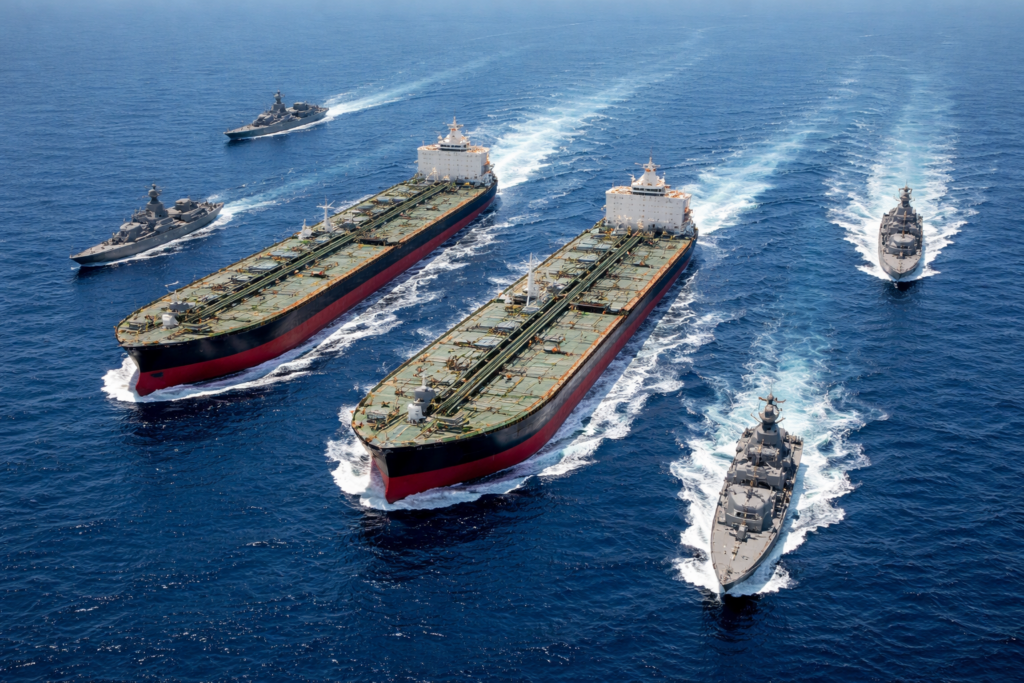
WASHINGTON, D.C. — United States military and Coast Guard forces executed coordinated operations to seize two oil tankers linked to Venezuela in international waters, marking the most significant enforcement action yet in a broad maritime blockade aimed at restricting Venezuelan crude shipments. The ships were intercepted in the North Atlantic and Caribbean Sea, reflecting an escalation of U.S. efforts to enforce sanctions and control Venezuelan energy exports under an ongoing policy that has drawn sharp international attention.
In the North Atlantic, U.S. European Command confirmed the boarding of the Motor Tanker Marinera, a vessel formerly known as Bella 1, which had been tracked across thousands of miles after evading earlier attempts to intercept it near Venezuelan waters. U.S. forces approached the ship following a multi‑week pursuit and executed the seizure under legal authority tied to U.S. sanctions enforcement. Government officials say the Marinera had been sanctioned because of its involvement in transporting petroleum products linked to Venezuela and other sanctioned networks. After boarding, the vessel was escorted toward U.S. jurisdiction for processing.
Simultaneously, a second tanker, identified as the Motor Tanker Sophia, was taken under control in the Caribbean Sea during a predawn operation. U.S. Southern Command told reporters that the Sophia had left Venezuelan ports laden with petroleum products and was determined to be in violation of the existing embargo regime. Homeland Security personnel and Coast Guard crews carried out the boarding and secured the vessel without reported injuries.
Senior U.S. officials described both operations as law enforcement in nature and part of a sustained effort to disrupt what they characterize as illicit oil transport networks that circumvent long‑standing sanctions on Venezuela. Security briefings indicated that seizure warrants were issued by federal courts, providing the legal basis for action on the high seas. The administration has long maintained that blocking the flow of sanctioned oil is essential to countering financial support for criminal and extremist networks and to exert pressure on political leaders in Caracas.
International reactions were swift. The Russian government condemned the seizure of the Marinera, calling it a violation of international maritime law and labeling the action “outright piracy,” citing the United Nations Convention on the Law of the Sea as the basis for its objection. Moscow demanded the humane treatment and repatriation of the vessel’s crew and warned of potential diplomatic consequences. European allied governments, while tempering public remarks, reaffirmed their support for sanctions enforcement but underscored the need to uphold established maritime norms.
The U.S. pursuit of the Marinera and Sophia comes amid a broader strategy that includes a naval blockade of sanctioned vessels entering or exiting Venezuelan waters, an initiative launched by the administration in late 2025 and expanded in early 2026. This campaign has resulted in multiple interdictions of oil tankers and heightened tensions in diplomatic circles. U.S. officials maintain that the blockade and seizures are defensive and necessary to enforce sanctions regimes that aim to cut off revenue streams they assert underwrite illicit activities.
At home, lawmakers expressed mixed reactions. Supporters hailed the operations as decisive action to uphold U.S. law and national security interests, arguing that securing control over sanctioned exports strengthens the integrity of global sanctions frameworks. Critics in Congress, however, cautioned against further unilateral military enforcement at sea without broader international legal consensus, warning it could set risky precedents for freedom of navigation and international trade.
The status of the seized vessels and their crews remains under U.S. jurisdiction as authorities prepare legal proceedings and evaluate next steps for disposition of the tankers and any cargo. The White House has signaled that revenue from seized oil shipments and any future sanctioned crude sales will be managed according to U.S. policy directives, an approach that has drawn both domestic and global scrutiny.
The evolving confrontation over Venezuela’s oil exports continues to shape geopolitical dynamics across the Atlantic and Caribbean, raising complex questions about maritime law, sanctions enforcement, and the intersection of national security and energy policy in the 21st century.
The Washington Herald
editorial@thewashingtonherald.com
Washington, D.C.






Be First to Comment