
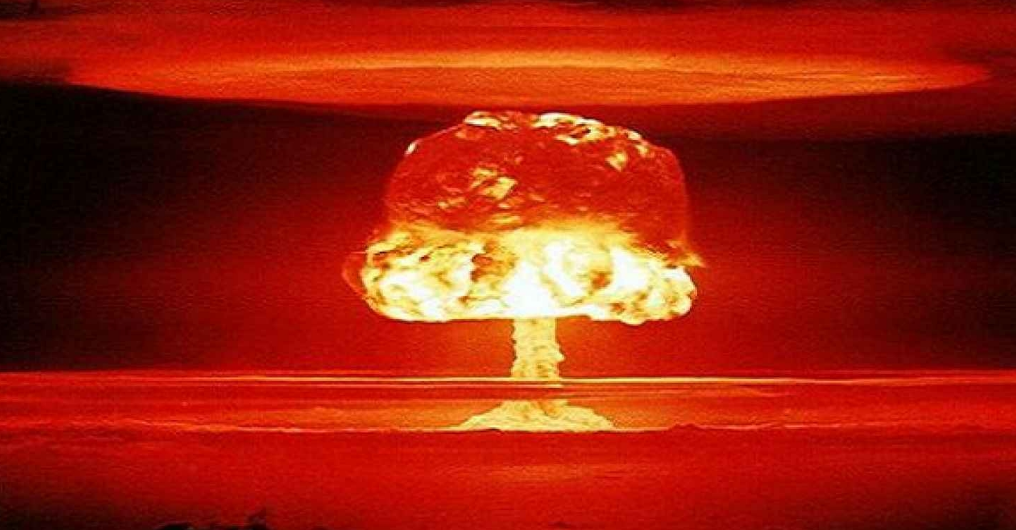
WASHINGTON, D.C. — On Thursday, October 30, 2025, at approximately 04:45 a.m. Pacific Time, President Donald Trump announced that he had directed the United States Department of Defense to immediately resume nuclear‑weapons testing for the first time in 33 years.
The directive was issued just prior to Mr. Trump’s meeting with Chinese President Xi Jinping in Busan, South Korea, and the announcement marked a notable shift in U.S. strategic policy. The President stated that other nuclear‑armed countries, particularly Russia and China, had advanced testing programs and that the U.S. must act “on an equal basis.”
The historic moratorium on explosive nuclear testing has been in place since 1992, and while the U.S. has maintained a significant weapons‑testing program for delivery systems, the explicit resumption of nuclear explosive testing would represent a major change.
• Mr. Trump made reference to “other countries’ testing programs” and said that the U.S. would “start testing our nuclear weapons on an equal basis” during transit to his meeting with Xi Jinping.
• Within hours of the announcement, the Comprehensive Nuclear‑Test‑Ban Treaty Organization (CTBTO) issued a statement warning that any explosive nuclear test would undermine global efforts at arms control and non‑proliferation and warned of the potential for reciprocal actions by other states.
• U.S. lawmakers and arms‑control experts reacted swiftly, with bipartisan concern that the decision could destabilize the international nuclear order and escalate strategic competition.
Administration officials have not yet clarified whether the directive refers to full‑scale underground nuclear detonations or more limited sub‑critical or delivery‑system tests. In remarks supporting the move, President Trump tied it to the rapid modernization and expansion of China’s nuclear arsenal, which some estimates suggest may surpass 1,000 warheads by 2030.
Analysts note that the timing—on the eve of the U.S.–China summit—may send a strategic message to Beijing and Moscow, as well as to allies and adversaries alike. However, the lack of detail on test modalities, timeline, scope and the legal basis for resuming testing has raised questions in Washington and abroad.
While the United States remains subject to the Comprehensive Nuclear‑Test‑Ban Treaty (CTBT) which Congress has not ratified but nonetheless adhered to since 1996, the announcement may trigger diplomatic and policy responses from treaty partners and non‑governmental bodies.
In the coming days, attention will focus on how the Pentagon implements the directive, whether it notifies international bodies of a test commencement, and how adversaries respond. Allies in Europe and Asia will also monitor U.S. signalling around conventional deterrence, alliance commitments and nuclear posture policy.
Given the potential for significant ripple‑effects across arms control frameworks and global strategic stability, this development marks a fast‑moving story with broad international implications.
The Washington Herald
editorial@thewashingtonherald.com
Washington, D.C.






Be First to Comment