
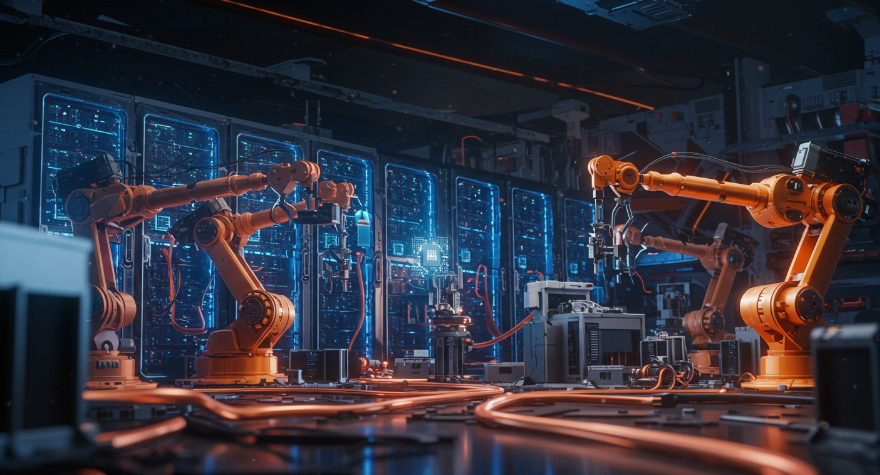
WASHINGTON, D.C. — As artificial intelligence accelerates across industries, economists and technology experts are warning that the AI boom is already widening economic inequality, enriching corporations and shareholders while leaving many workers behind.
Despite widespread claims that AI will dramatically boost productivity and create new opportunities, recent analysis suggests the benefits are being concentrated at the top. Geoffrey Hinton, often referred to as the “godfather of AI,” has repeatedly cautioned that advanced AI systems could eliminate large numbers of routine and white‑collar jobs, triggering widespread displacement before new roles emerge.
A report by Goldman Sachs estimates that AI could displace roughly 6 to 7 percent of the U.S. workforce, with entry‑level, clerical, and routine cognitive roles most vulnerable. Analysts note that companies are increasingly automating junior tasks, slowing hiring pipelines and reducing traditional career on‑ramps for young workers.
While AI adoption has delivered modest productivity gains — estimated at roughly one percent so far — economists say those gains have largely translated into higher corporate profits rather than higher wages. Stock valuations for major technology firms continue to surge as firms deploy AI to cut costs and scale output, reinforcing a pattern in which capital owners benefit disproportionately.
The World Economic Forum has warned that avoiding severe disruption will require aggressive retraining programs, labor‑friendly policies, and human‑centered deployment strategies. Without those safeguards, the organization cautions that AI risks deepening inequality by replacing workers faster than economies can absorb them into new roles.
Critics argue that the narrative promising AI‑driven wealth creation for everyday Americans masks a harsher reality. In the absence of strong policy intervention, they say, AI functions less as a democratizing force and more as a profit‑multiplier for firms already positioned to dominate data, computing power, and capital markets.
As governments and businesses race to adopt AI at scale, the debate is shifting from whether AI will transform the economy to who will ultimately benefit from that transformation — and whether the social costs will be addressed before they become irreversible.
The Washington Herald
editorial@thewashingtonherald.com
Washington, D.C.



Be First to Comment