
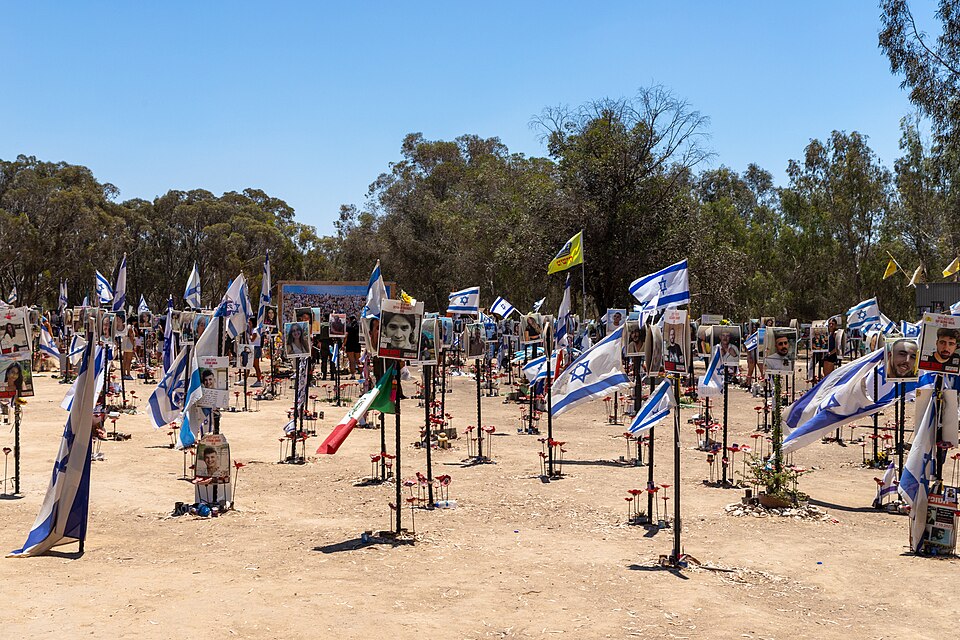
WASHINGTON, D.C. — Israel on Tuesday marked two years since the Oct. 7, 2023 attack, a day that reshaped the country’s politics, security thinking and society. Sirens, vigils and memorial ceremonies were held across communities closest to the Gaza border and in major cities, even as the war that followed the attack grinds on and prospects for a durable cease-fire remain uncertain.
The anniversary comes amid renewed diplomatic movement. Israeli and Hamas representatives arrived in Egypt for indirect talks around a U.S.-backed framework intended to halt fighting and secure the release of hostages still held in Gaza. Negotiators have circled variants of the same core trade-offs for months: phased pauses in combat, staged releases of captives, and a roadmap for governance and reconstruction. None of the previous rounds have stuck, and officials caution that political pressure on all sides remains intense.
For Israelis, commemoration is inseparable from grief. The attack killed roughly 1,200 people — many in border communities and at the Nova music festival — and 251 were abducted. Families of hostages say every anniversary speech feels hollow without movement at the table. “It’s been two years since thousands of Hamas-led militants poured into southern Israel,” AP noted in a rolling update, “storming army bases, farming communities and an outdoor music festival.”
Beyond Israel, the memory of Oct. 7 fed dueling street narratives. In recent days, pro-Israel rallies demanded the swift release of hostages, while pro-Palestinian demonstrations called for a sustained cease-fire and greater pressure on Israel over Gaza’s humanitarian catastrophe. Reuters footage showed competing rallies across European capitals; authorities in Australia criticized a planned pro-Palestinian event scheduled for the anniversary. These scenes underline how the conflict has become a political litmus test far from the battlefield.
Inside Gaza, the situation remains dire, with aid agencies warning that any pause must include credible guarantees for the flow of humanitarian supplies and protections for civilians. Negotiators say those operational details — corridors, monitoring, and sequencing — are as contentious as the headline deal points. Israel’s war cabinet, for its part, faces hard questions about end-state planning: who governs Gaza the day after, how to prevent renewed cross-border attacks, and what security architecture might replace the ad-hoc arrangements that failed in 2023.
The anniversary also sharpened political divides inside Israel. Analysts note a public split over the government’s wartime leadership and accountability, even as the country remains broadly united on the return of hostages. Internationally, Israel’s image has shifted over two years from early sympathy after Oct. 7 to intensifying scrutiny over civilian harm and access to aid — a tension that will shadow the cease-fire talks. Editorial analysis in major outlets frames this period as one in which Israel has gained tactical leverage but paid a diplomatic price.
Whether this week’s talks produce more than symbolism will hinge on verification mechanisms and domestic politics on both sides. For families counting days, not communiqués, the measure of success is painfully simple: hostages home alive, and a horizon beyond perpetual crisis. Until then, the second Oct. 7 anniversary is a reminder that the conflict isn’t frozen in the past; it’s still writing the present.
The Washington Herald
editorial@thewashingtonherald.com
Washington, D.C.




Be First to Comment